Adoro
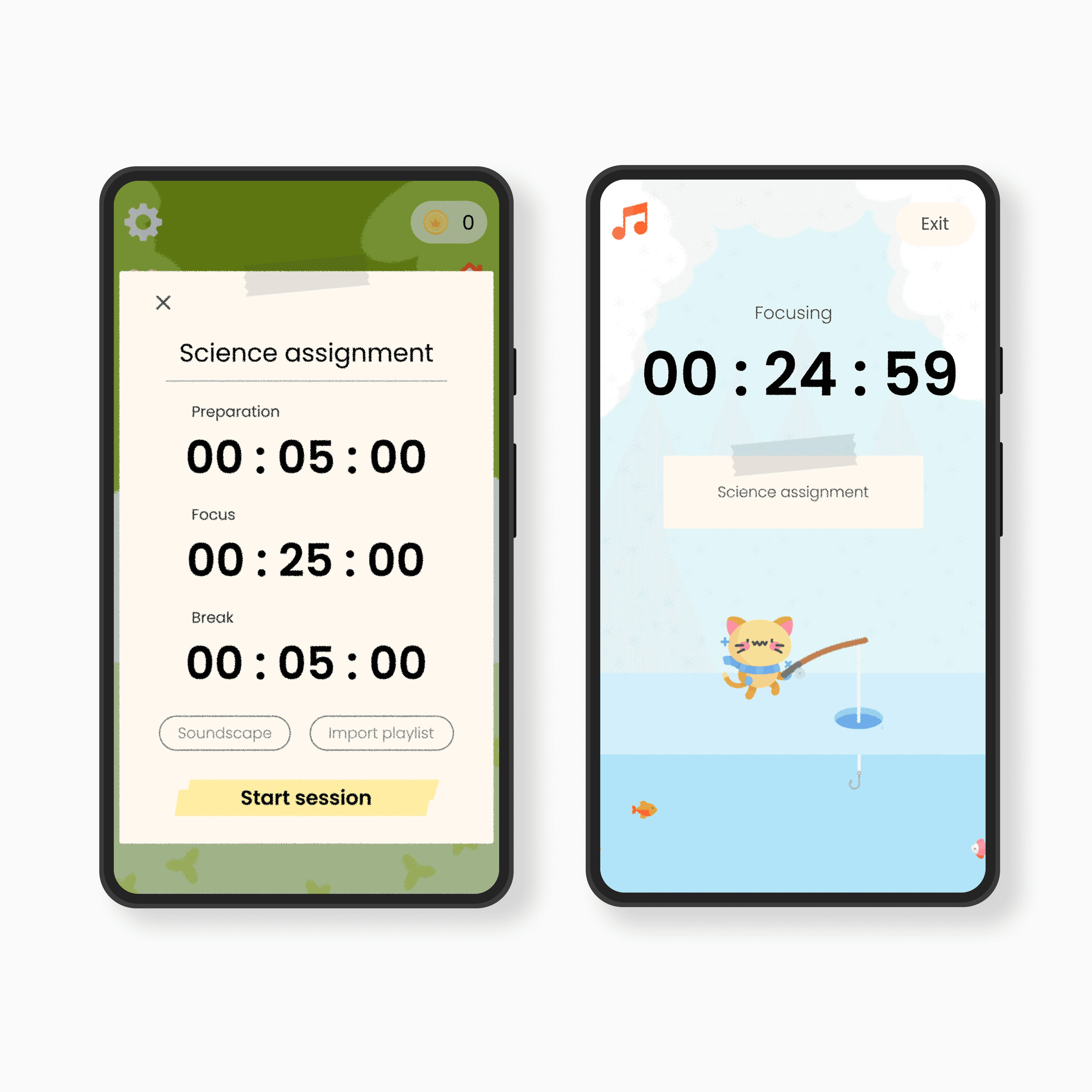
Gamified Pomodoro cycle for students, aiming to increase user satisfaction and engagement by integrating interior decorating and meaningful social connections, achieving an 84% user motivation rate.
Duration
August-October 2025
My Role
UX Designer
Project Type
Solo Personal Project
Tools used
Figma, FigJam, Notion, Notability
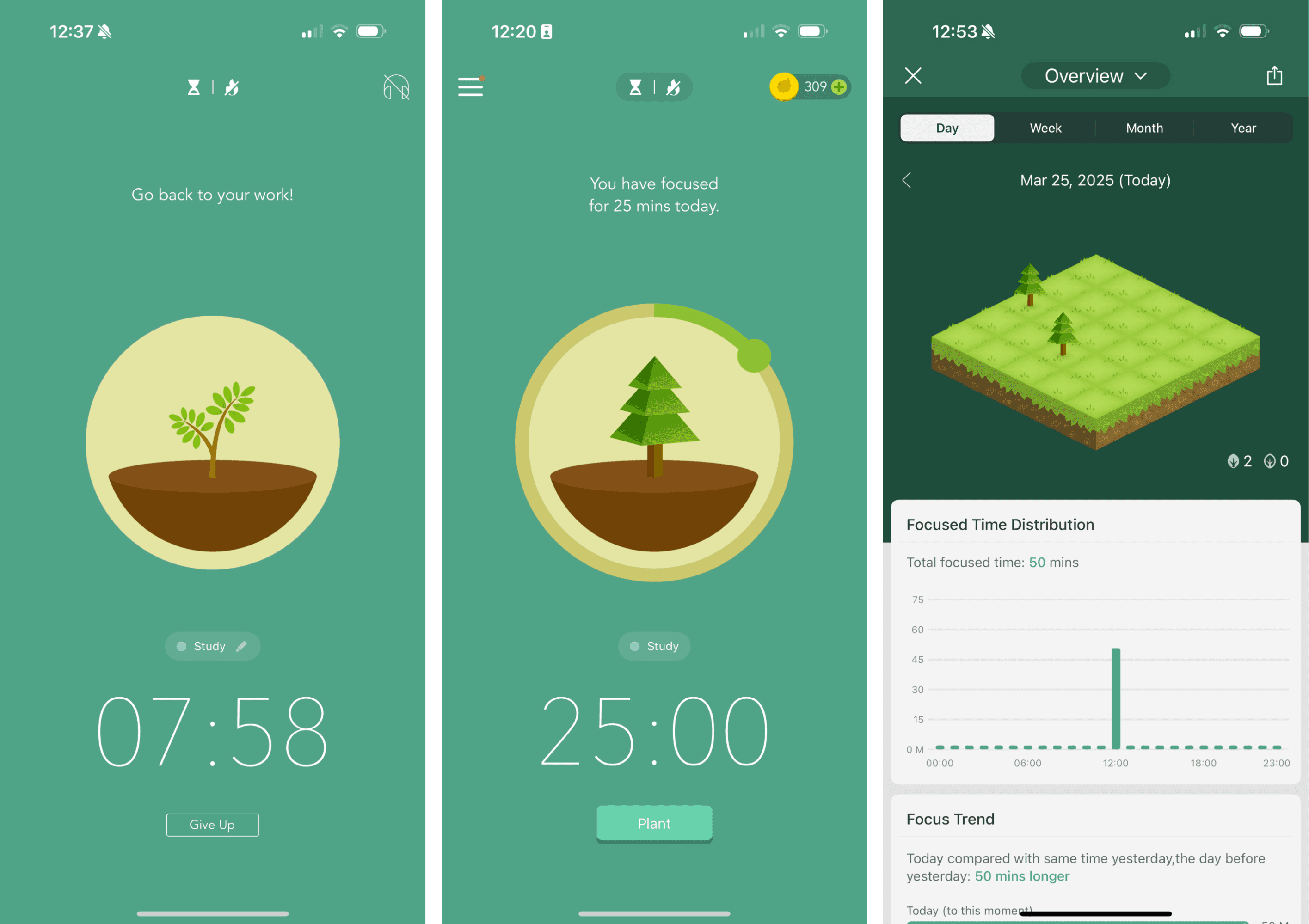
Gamification increases engagement and offers intrinsic value
By earning coins for each minute focused, users can decorate a virtual space.
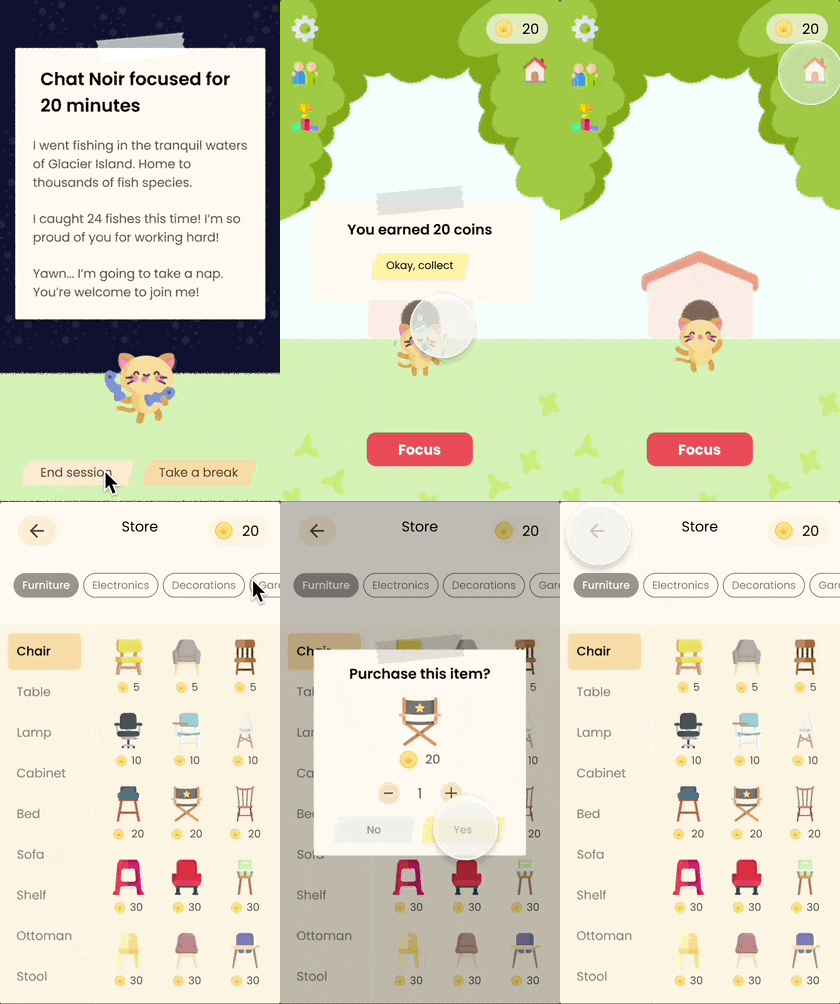
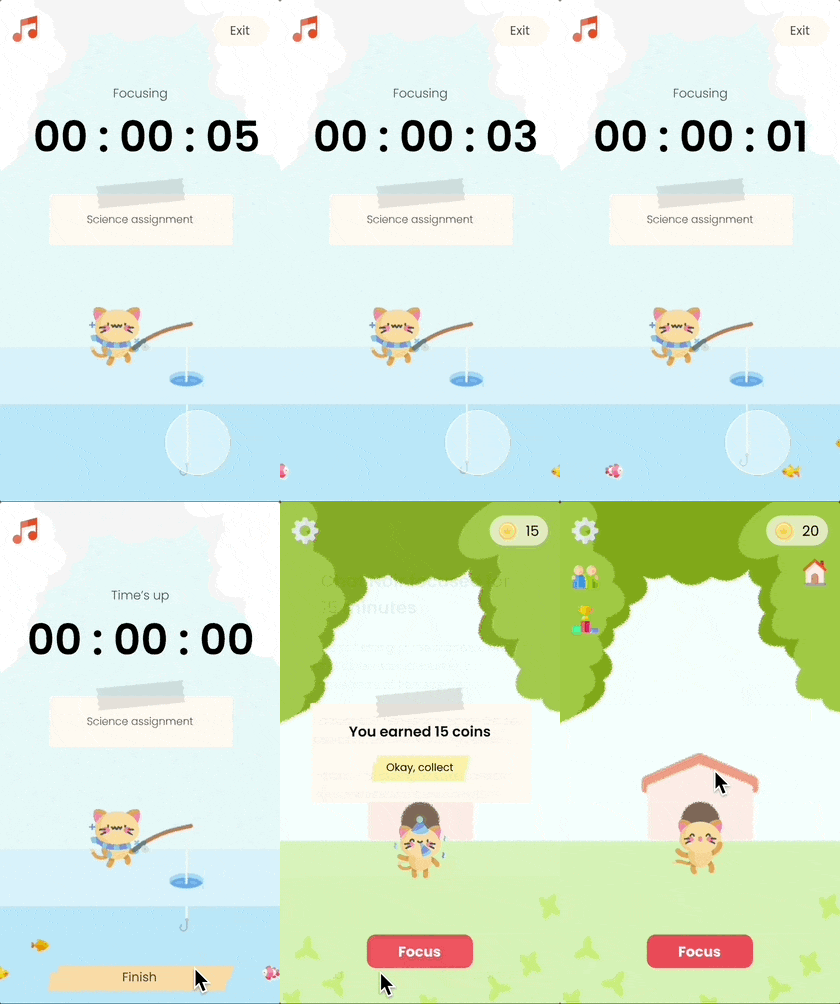
Social connection boosts retention by reducing isolation
Focusing alongside a character and interactive social spaces counters the app abandonment.
Cues enhances effectiveness by improving concentration
Utilizing motivational stimuli and reducing distractions helps concentration.
94% user satisfaction
Users were highly satisfied with the final design, which shows product effectiveness and predicts a high retention rate.
84% user motivation
The user experience was consistently described as motivating and rewarding, predicting long-term user engagement.
+41.6% positive feedback
Iterations directly increased positive user feedback between the initial and final prototypes.
Analyzing abandonment and market trends
White-paper Research and User Interview
Finding #1: 80% of users abandon Pomodoro apps
User interviews show that 80% of users have previously used Pomodoro apps and then abandoned them.
Opportunity: Gamification for engagement and accessibility
Gamification increases engagement and productivity in classrooms, the workplace and for autistic people (Bustard et al., 2011; Blum-Dimaya et al., 2010).

Duolingo
Language-learning: Streaks, leaderboards, rewards

Khan Academy
Education: Earn points by solving problems and watching videos

Headspace
Mindfulness: Streaks, progress tracking, rewards

Animal Crossing
Social simulation game in a village of animals

Minecraft
Open-world sandbox game to build anything

Stardew Valley
Farming and life simulation game
Finding #2: Growing global cozy game market
Rising mental health awareness leads to a growing demand for relaxing games. The global cozy game market will reach USD 1473 mil. by 2032
Opportunity: Cozy game mechanics enhance retention up to 300%
Features like social spaces and cooperative mechanics retain users 300% more than solo experiences.
Ideating the main concept to increase user engagement and satisfaction
White-paper Research
Self-determination theory: 3 Basic Psychological Needs
Autonomy: Sense of freedom when performing actions
Competence: Sense of mastery and progression
Relatedness: Sense of meaningful social connections
(Deci & Ryan, 1985; Deci & Ryan, 2000; Tyack and Wyeth, 2017; Tyack et al., 2020; Cunningham et al., 2015; Voll, 2025)
Main concept based on the Self-determination Theory
Competence: Reward focused work sessions with coins for furniture.
Autonomy: A wide range of furniture, setting goals for each session, and a high degree of freedom to decorate spaces.
Relatedness: Building a relationship with a fictional character.
Understanding motivational and distracting factors
User Interview
Finding #1: Stimuli can be either motivating or distracting
When users described successful focus sessions, 80% of feedback involved either leveraging helpful stimuli or eliminating distracting ones. Additionally, 80% were about music or noise.
Features for stimuli management
Motivational features, such as soundscapes and preparation time, prompt users.
Removing distraction: App and website blocking.

Motivational stimuli
E.g., music signals the brain to enter a focused state

Distracting stimuli
E.g., message notifications interrupts concentration

Situational factor
Students don't use Pomodoro timers after exam season

Social factor
Users find the app less appealing when no friends are using it
Finding #2: Situational and social factors cause user abandonment
Users lack engagement from solo experience without peer involvement, or find it unnecessary once a situational need, like exam season, has passed.
Sustained Engagement: Intrinsic value
Provide continuous engagement independent of external factors. E.g., building relationships with a fictional character, virtual work sessions, and interior decorating.
Optimizing the effectiveness of focus sessions
Usability Testing
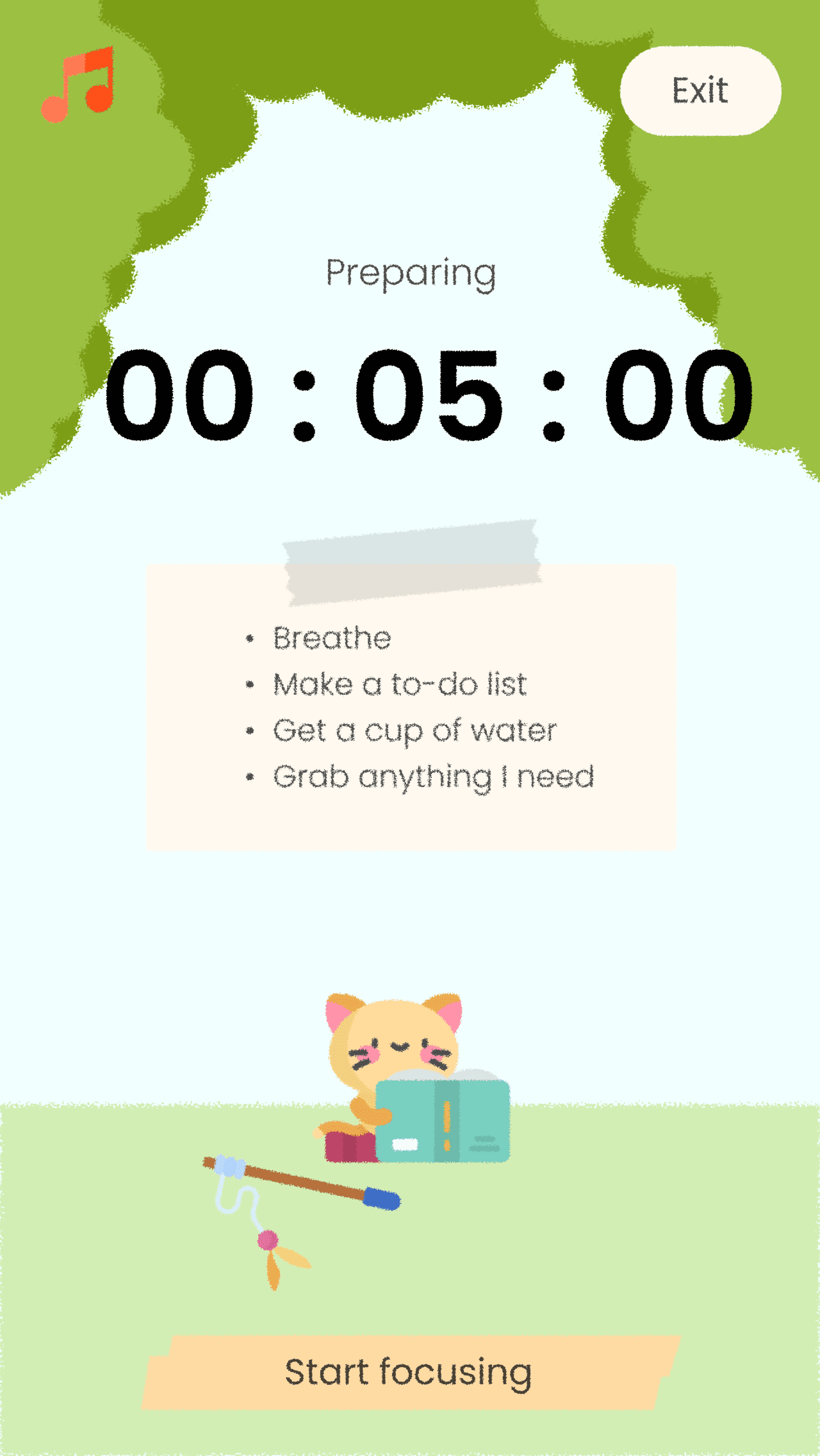
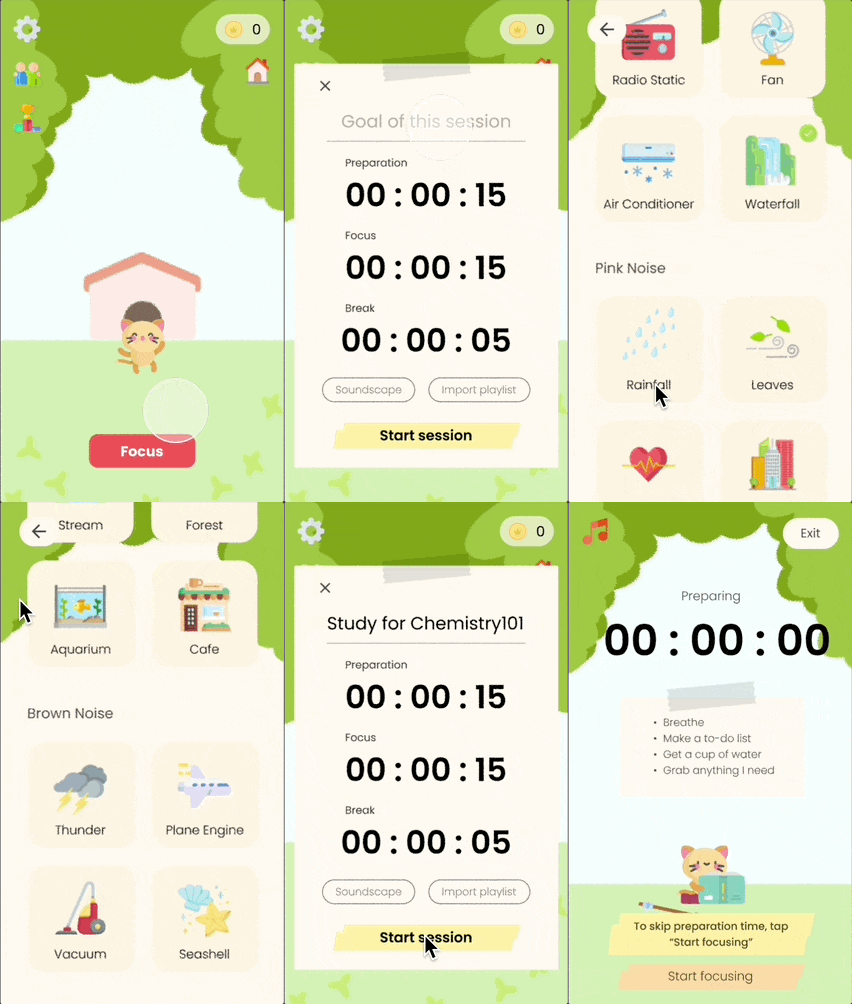
Preparation time
In the long run, preparation time itself becomes a conditioned stimuli.
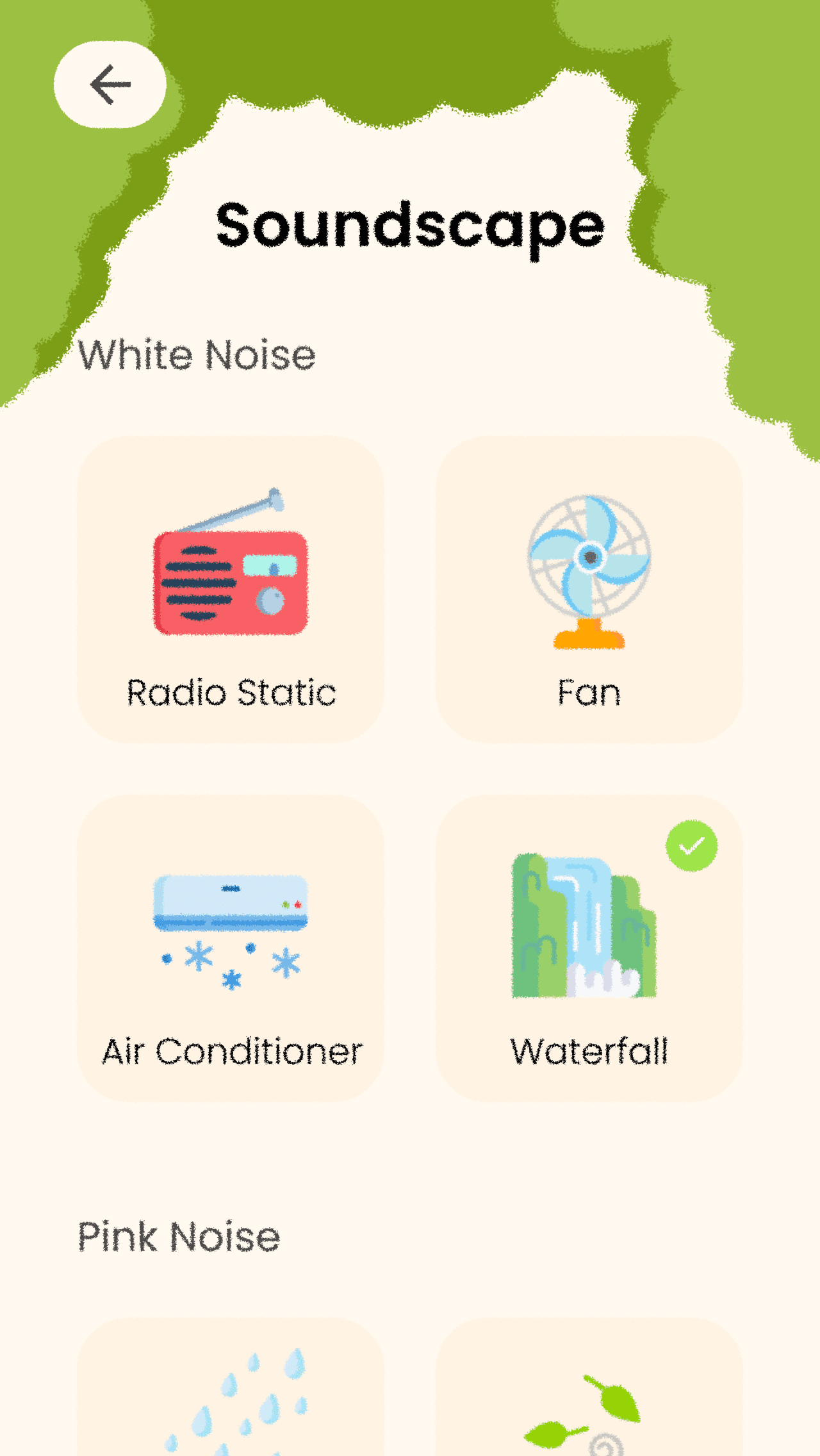
Auditory stimuli
A variety of noise options and allow playlist imports.
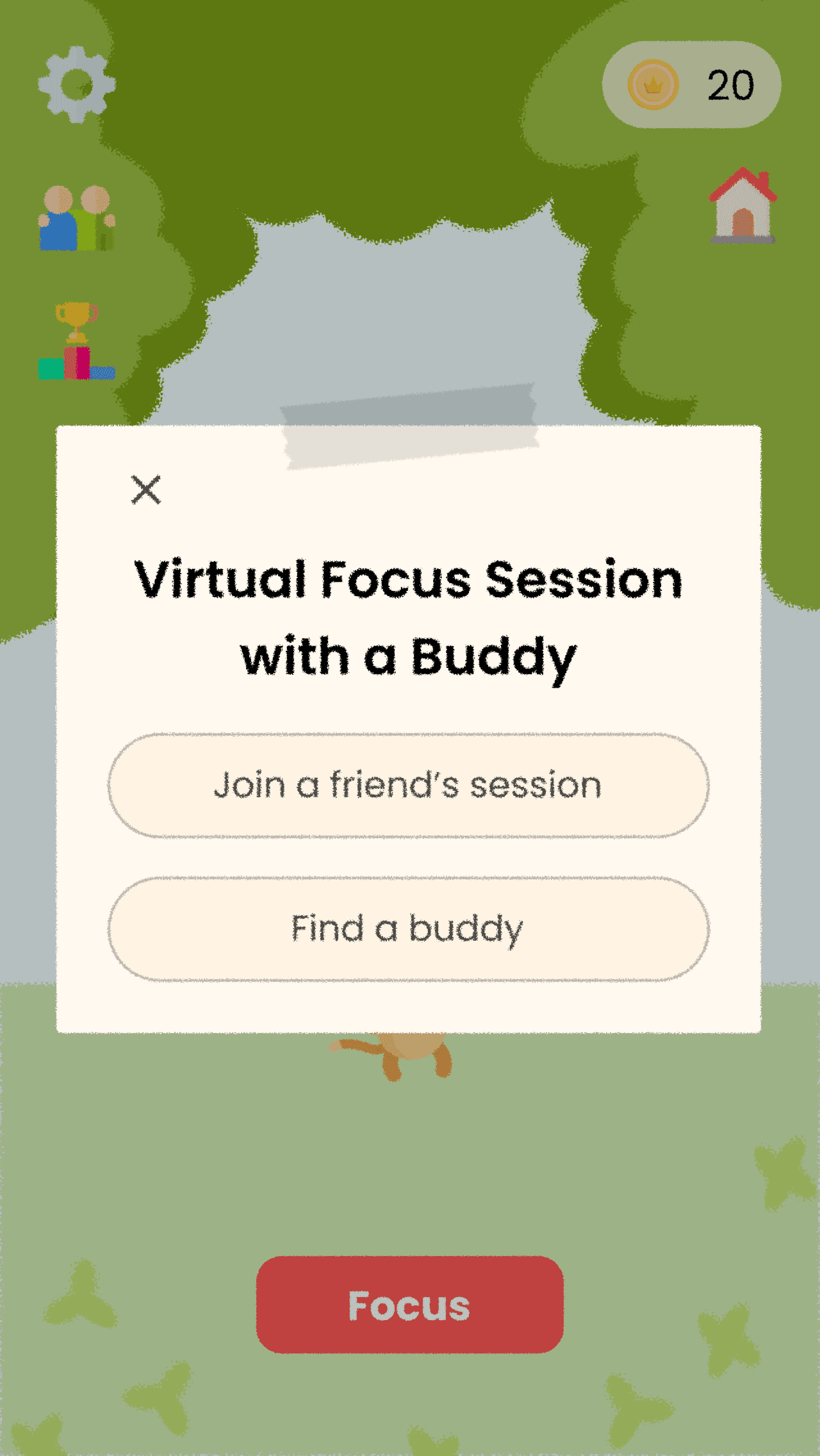
Social accountability
Body doubling to focus with friends or other users.

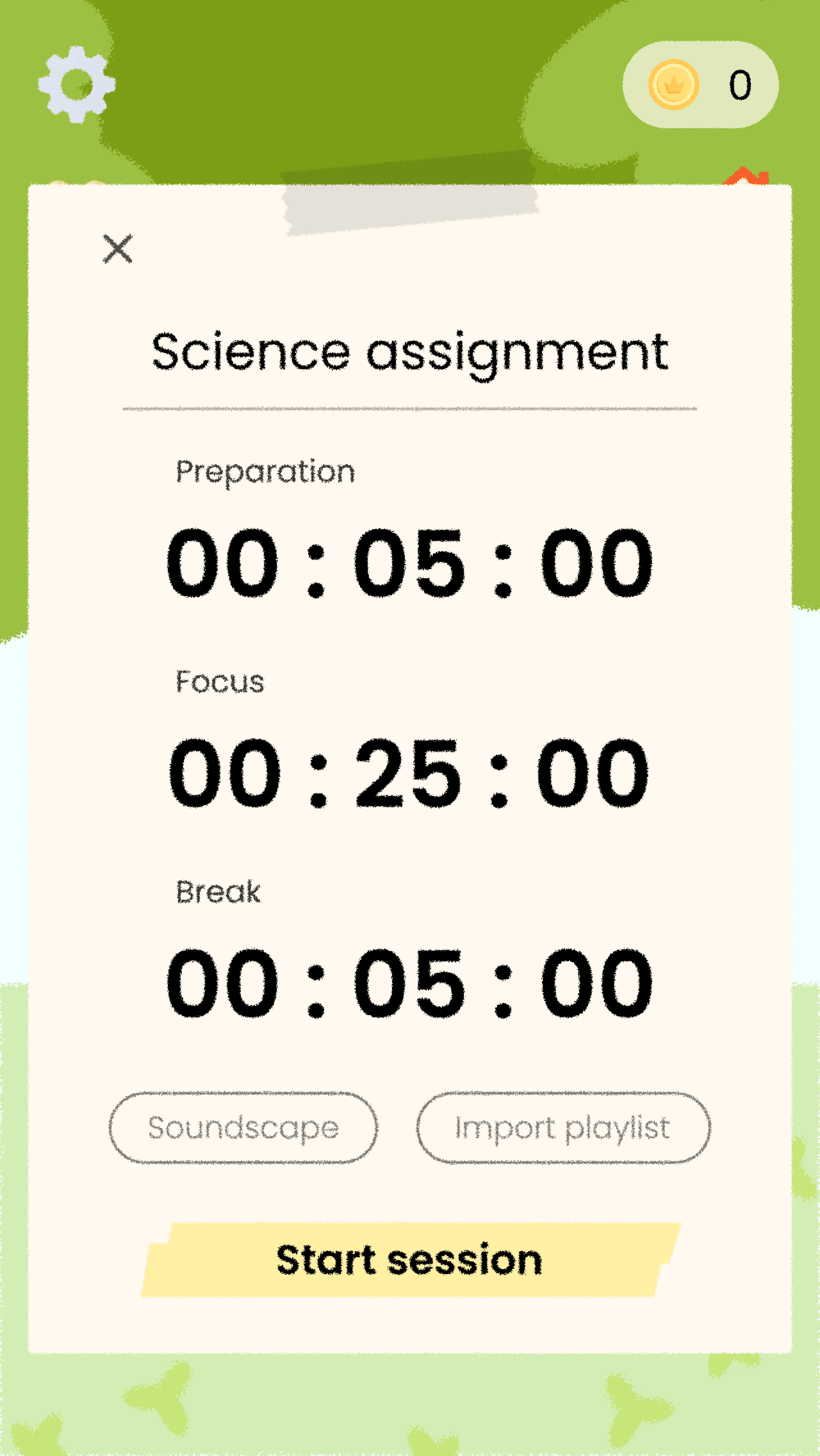
Default presets
Eliminate setup delays when motivation strikes.
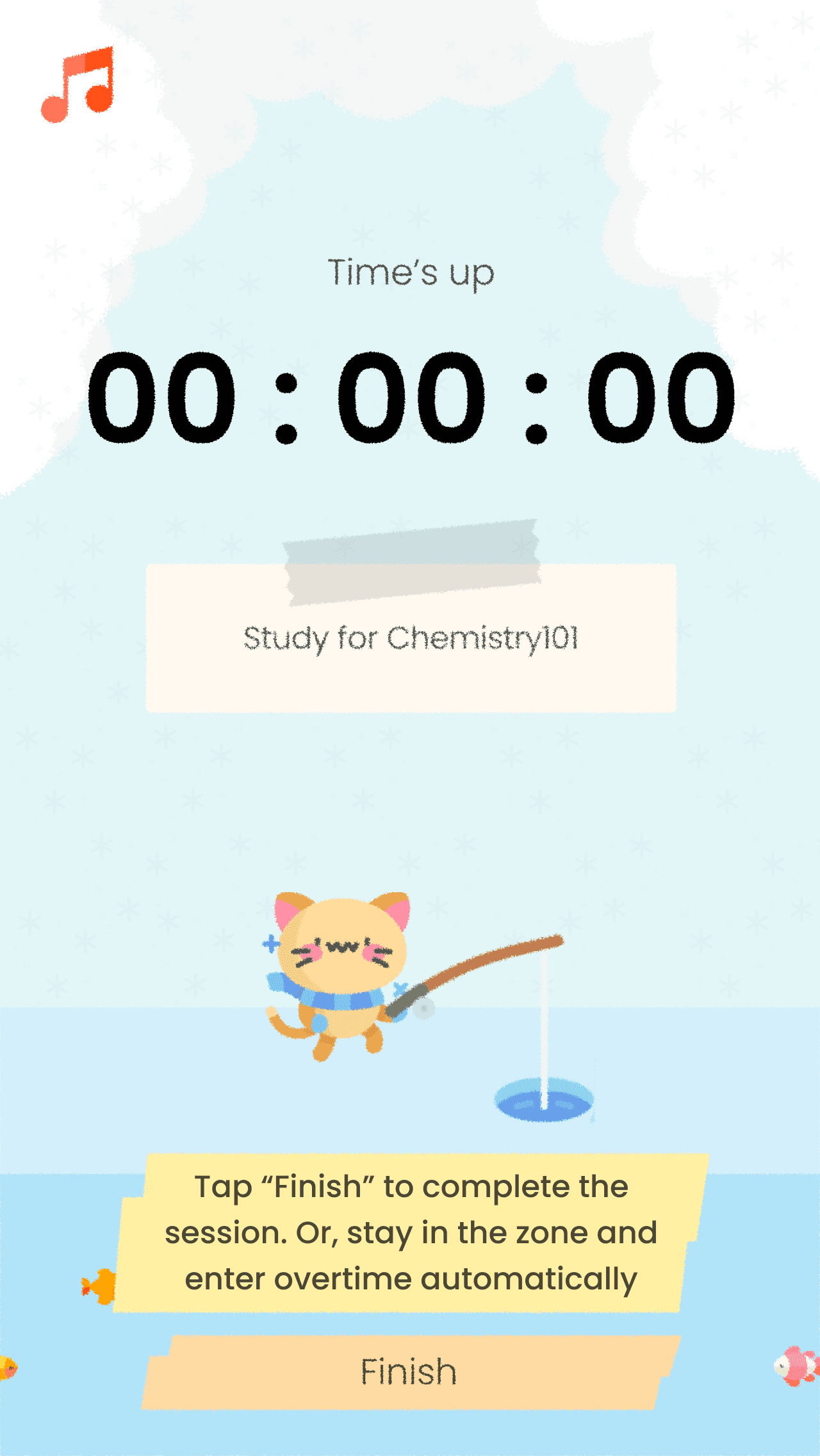
Full pomodoro cycle
Remove the need to switch to other distracting applications.
Automatic overtime
Extends a session without users breaking concentration.
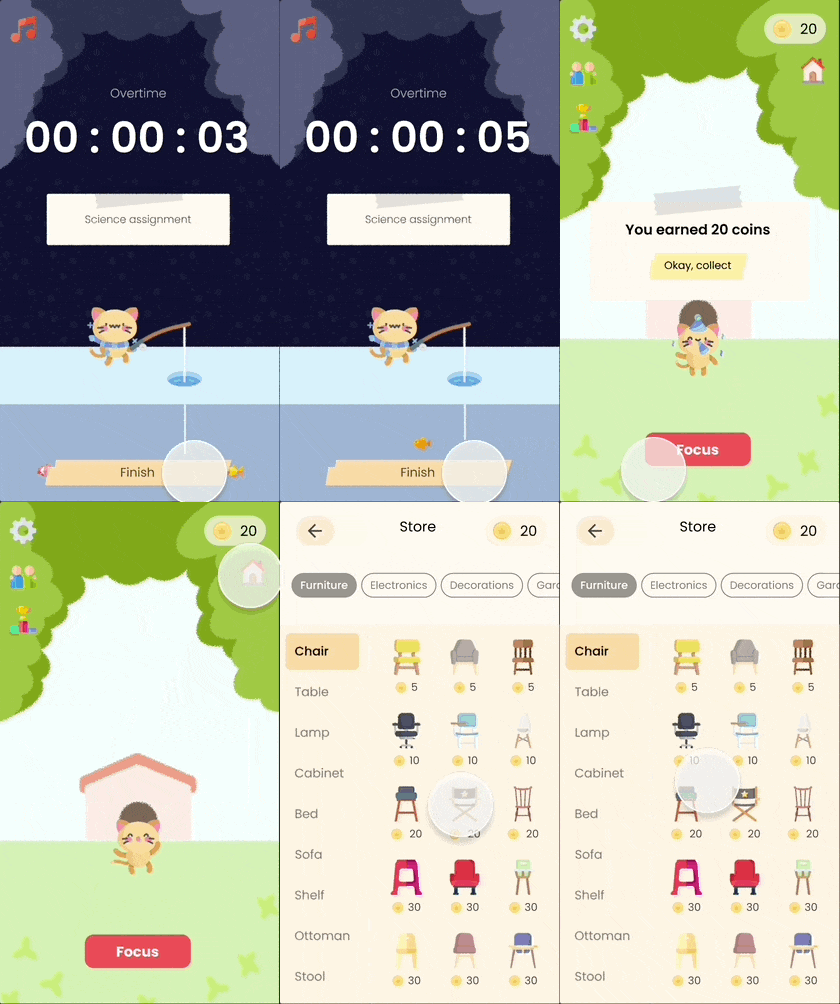
Competence: Making users feel capable and productive
Tangible rewards (Gamification)
Users are rewarded with coins after focus sessions. The long-term goal of decorating the house promotes consistent engagement.
Immediate gratification
A coin notification appears right after a session ends. This positive reinforcement bypasses the delay of accomplishing real-world goals.
Relatedness: Fostering connections and reducing isolation
Fictional character companion
Users customize and focus with a character that provides emotional support, creating a parasocial bond that encourages users to return.
Social competition and community
Leaderboards and visiting friends' houses foster a sense of community. This taps into social accountability and friendly competition.
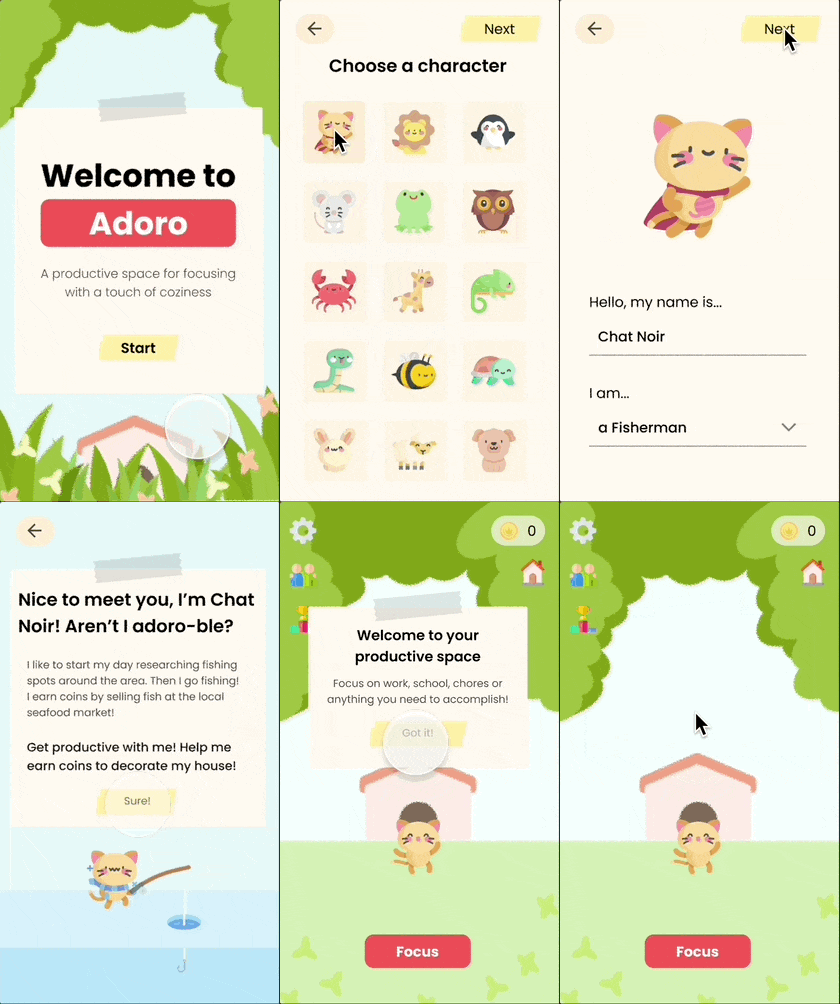
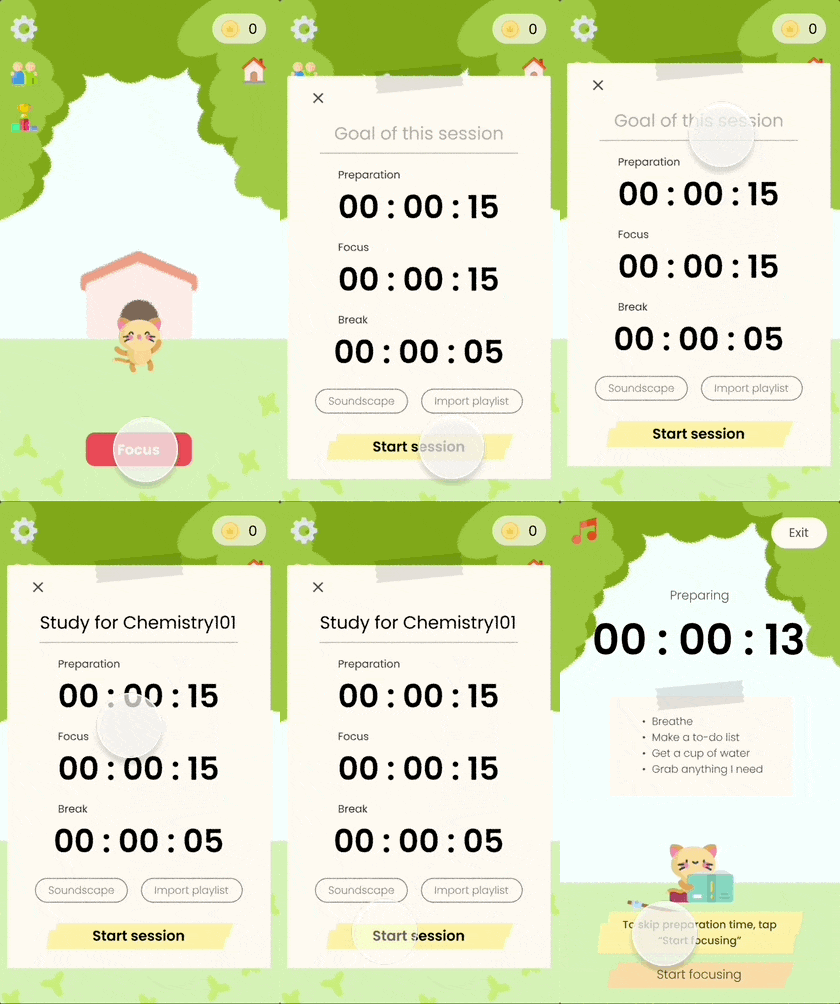
Autonomy: Giving users control and freedom
Setting focus sessions
Users have total control over their focus goals, timers, break lengths, and reminders. A personalized session feels more valuable, which increases long-term adoption.
Creative freedom in decorating
Users have total freedom over spending coins and decorating their virtual space. Self-expression is inherently rewarding. Therefore, the desire to perfect their space motivates users to earn coins.
Measuring success in the future
Daily/Monthly active users
This measures whether the app delivers enough value to become a habitual study tool, moving beyond situational use (like exam seasons). When the DAU/MAU ratio is high, it shows that long-term engagement drivers motivate users to return daily or weekly.
Feature adoption rate
This metric identifies which specific features users find genuinely valuable for maintaining focus. Improving high-adoption features enhances the user experience and identifies potential opportunities for future premium monetization.
Average session length
A longer average session shows that the combination of the Pomodoro timer, audio stimuli, and gamification mechanics successfully minimizes distractions and sustains user concentration.
Net promoter score
A high NPS indicates that students are not only using the app but are also emotionally invested enough to promote it to their friends. Social features become more valuable with a larger user base.
Lessons and Challenges
Project constraints
The lack of a full user experience lessened the amount of feedback. E.g., users can’t actually decorate the house, nor can they set and use the timer.
Summarizing insights
From the user interviews, the theme for “stimulus” was called “environment to focus.” If I had chosen the right term at the start, I would have had a clearer goal in mind during the design phase.
Blum-Dimaya, A., Reeve, S. A., Reeve, K. F., & Hoch, H. (2010). Teaching children with autism to play a video game using activity schedules and game-embedded simultaneous video modeling. Education and Treatment of Children, 33(3), 351-370.
Bustard, D. W., Black, M. M., Charles, T., Moore, A. A., McKinney, M. E. T., & Moffett, P. (2011). GEL: A generic tool for game-enhanced learning. In Proceedings of International Conference on Engineering Education, Belfast, UK, iNEER.
Cunningham, R., Alex, L., Frederick, C., Via, C., & Kring, J. (2015, September). Studying human relatedness through a shared gaming experience. In Proceedings of the Human Factors and Ergonomics Society Annual Meeting (Vol. 59, No. 1, pp. 1824-1828). Sage CA: Los Angeles, CA: SAGE Publications.
Deci, E. L., & Ryan, R. M. (1985). Intrinsic motivation and self-determination in human behavior. New York, NY: Plenum Press.
Deci, E. L., & Ryan, R. M. (2000). The “what” and “why” of goal pursuits: Human needs and the self-determination of behavior. Psychology inquiry, 11(4), 227-268.
Tyack, A., & Wyeth, P. (2017, November). Exploring relatedness in single-player video game play. In Proceedings of the 29th Australian conference on computer-human interaction (pp. 422-427).
Tyack, A., Wyeth, P., & Johnson, D. (2020, April). Restorative play: Videogames improve player wellbeing after a need-frustrating event. In Proceedings of the 2020 CHI conference on human factors in computing systems (pp. 1-15).
Voll, Kimberly. “Self-Determination Theory for Multiplayer Games.” Digital Thriving Playbook, 13 Feb. 2025, digitalthrivingplaybook.org/big-idea/self-determination-theory-for-multiplayer-games/#:~:text=Self%2DDetermination%20Theory%20(SDT),and%20relatedness%20(social%20connection).